Repair quality
Why the gasket matters in phone repair (and what to ask your repairer)
4 min read
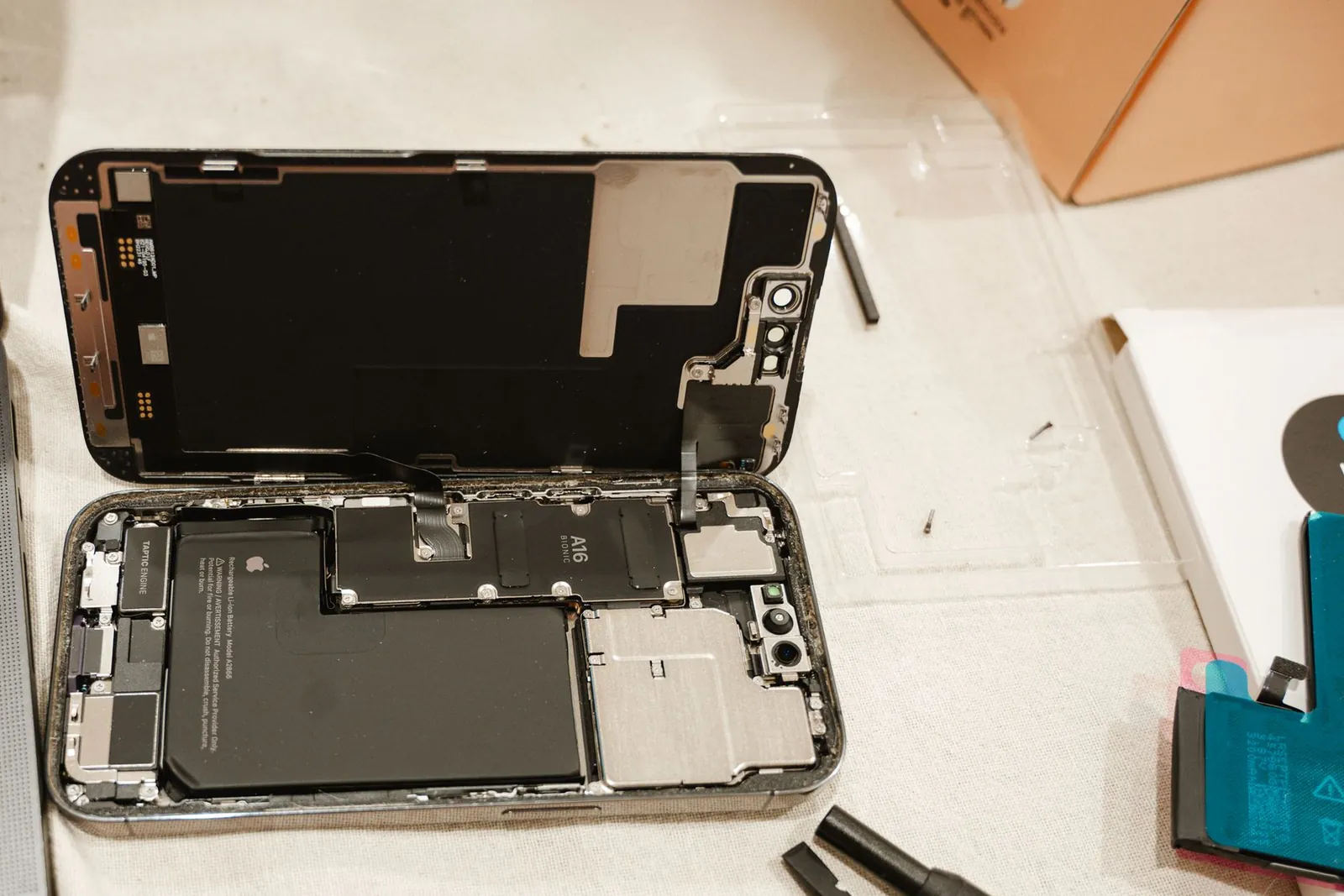
Open up a modern phone and, between the screen and the frame, you'll find a thin strip of adhesive. It isn't glamorous and most people never hear about it. But it's one of the first things disturbed in a screen or battery repair, and one of the easiest things to get wrong.
What is a gasket in a smartphone?
A gasket is the thin adhesive seal that runs around the edge of the display and, on many phones, around the back glass too. It's cut for one specific model, so its shape follows that frame exactly.
It does several jobs at once:
- Keeps dust out of the camera area, the speaker mesh and the space under the screen.
- Blocks splashes and humidity from reaching the board and its connectors.
- Holds the display firmly against the frame, so the screen sits flat and doesn't lift at the edges.
- Adds a little cushioning against knocks and flex, so the phone feels solid.
Because it's adhesive, it can't be reused. The moment a screen is lifted for a repair, that seal is broken.
Why it matters after a repair
A phone that has been opened and closed without a fresh seal can feel perfectly fine on day one. The problems tend to show up later:
- Dust collecting behind the screen or in front of the camera lens, which shows up as specks in photos.
- Moisture from humidity, rain or a splash getting in, which can corrode connectors over time.
- The edge of the screen slowly lifting and leaving a visible gap.
- A phone that feels a little less solid than it did before the repair.
None of this happens to every phone, and none of it happens overnight. But the seal costs very little next to the parts it protects.
Why some repairs skip it
Fitting a gasket properly takes time and care, which makes it the step most likely to be rushed or dropped when a repair is being done quickly:
- The old adhesive has to be cleaned off the frame completely, which is slow, fiddly work.
- The new gasket has to be the right one for that exact model.
- It has to be placed accurately and pressed down evenly for long enough to bond.
- It's an extra material cost that the customer can't see once the phone is closed.
That's why some repairs reuse the old adhesive, or use a dab of general-purpose glue instead. From the outside it looks the same. It doesn't protect the same way.
What a proper reseal involves
- Open the phone and remove the old adhesive and any debris from the frame.
- Clean the surface so the new adhesive can grip.
- Fit a new, model-specific gasket in the frame.
- Line up the display and press it down evenly, then leave it under pressure while the adhesive sets.
Skipping the cleaning or the pressing is a common reason a reseal doesn't hold.
Does a new gasket make the phone waterproof again?
Not in the way it was when it left the factory. Water-resistance ratings such as IP67 or IP68 are tested on brand-new phones, in a lab, with the factory seal. Once a phone has been opened, no repairer can promise the original rating.
A fresh gasket does restore a good deal of protection against dust and everyday splashes, which is far better than no seal at all. It isn't a licence to take the phone swimming.
Why it matters more on premium phones
Flagship phones are built tighter and lean more on their seals. On many of them both the display and the back glass are sealed, there is little room to spare, and the parts are expensive. A poorly sealed screen on a high-end phone is more likely to let dust reach the camera or moisture reach the board, and those are the costliest things to fix later.
Questions worth asking any repairer
- Will you fit a new adhesive seal, or reuse the old one?
- Is it the right one for my exact model?
- Will I be told if the original water resistance can't be kept?
- Is the repair covered by a written warranty, and what does it cover?
A good repairer will answer these without fuss. If the answers are vague, that's worth noticing before the phone is opened.
The bottom line
The gasket is a small part doing a quiet job: keeping dust and splashes out and holding the screen in place. It's easy to skip because nobody sees it, and that is exactly why it's worth asking about. Whoever repairs your phone, ask about the seal before they start.